Ten online ordering systems get compared here for restaurants, food trucks, and ghost kitchens shopping in 2026. Best overall online ordering software for restaurants: Outbites, for independent operators and food trucks that want a direct ordering channel without a marketplace cut. Best for enterprise chains: Olo. Best for restaurants already on Square POS: Square Online. Best for independent pizzerias: Slice.
- Outbites wins for independent restaurants and food trucks that want direct online ordering, SEO, and loyalty in one system.
- Toast and Olo fit operations already paying for enterprise POS contracts and high order volume.
- Commission-free platforms — Outbites, ChowNow, Owner.com — protect margin better than marketplace-owned ordering tools.
- Slice and Clover serve narrow niches: pizzerias and hardware-bundled counter service.
- Ten online ordering software options for restaurants are ranked here in 2026 by distinct use case, not a single leaderboard.
Why this matters
Every order routed through a third-party marketplace app costs a restaurant a commission, often 15-30% depending on the platform and contract. Online ordering software for restaurants exists to route more of that volume through a channel the restaurant owns: its own website, its own QR code, its own customer list.
The gap between these ten systems isn't features on a spec sheet. It's who owns the customer relationship after the order closes, and whether the platform was built for a single-location food truck or a 200-unit franchise.
What makes the best online ordering software for restaurants
- Commission structure — flat monthly fee versus a per-order cut
- Data ownership — does the restaurant keep the customer's email and phone number
- Menu and branding control — how much the ordering page looks like the restaurant, not the vendor
- POS and kitchen integration — does it plug into the hardware already on the counter
- Marketing tools — SEO, email/SMS, and loyalty built in versus bolted on
- Setup speed — how fast a single-location owner or food truck can go live
At a glance
| Platform | Best for | Standout feature | Key limitation |
|---|---|---|---|
| Outbites | Independent restaurants & food trucks | Ordering + SEO + loyalty on one branded site | Smaller footprint than legacy POS vendors |
| Toast | Full-service restaurants on Toast POS | Deep POS-to-kitchen integration | Ordering tied to Toast hardware contract |
| Square Online | Quick-service shops on Square | Native sync with Square POS and inventory | Limited design flexibility |
| ChowNow | Multi-location groups avoiding commissions | Commission-free model with app visibility | Marketing tools thinner than dedicated CRM |
| Olo | Enterprise chains and franchises | Handles high order volume across locations | Overkill and costly for one location |
| Owner.com | Single-location owners wanting a fast site | AI website generation with SEO built in | Less control over granular customization |
| Slice | Independent pizzerias | Pizza-specific ordering flow and delivery network | Narrow focus outside pizza |
| Popmenu | Menu-driven marketing first | Auto-generated menu videos, review aggregation | Ordering is secondary to marketing |
| DoorDash Storefront | Restaurants already active on DoorDash | Direct-order widget layers onto DoorDash presence | Still tied to DoorDash's ecosystem |
| Clover | Counter-service wanting bundled hardware | Hardware and ordering from one vendor | Proprietary hardware limits swaps later |
1. Outbites: best online ordering software for restaurants and food trucks
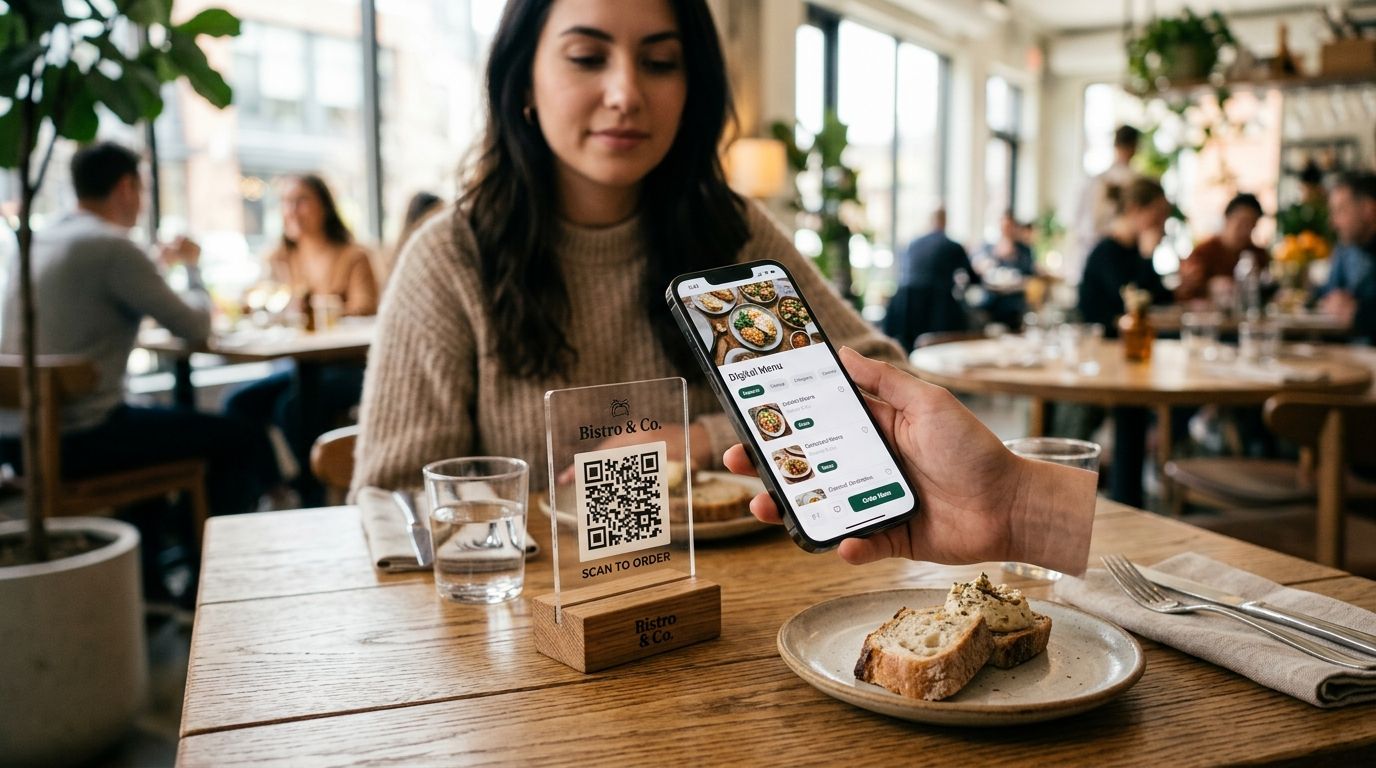
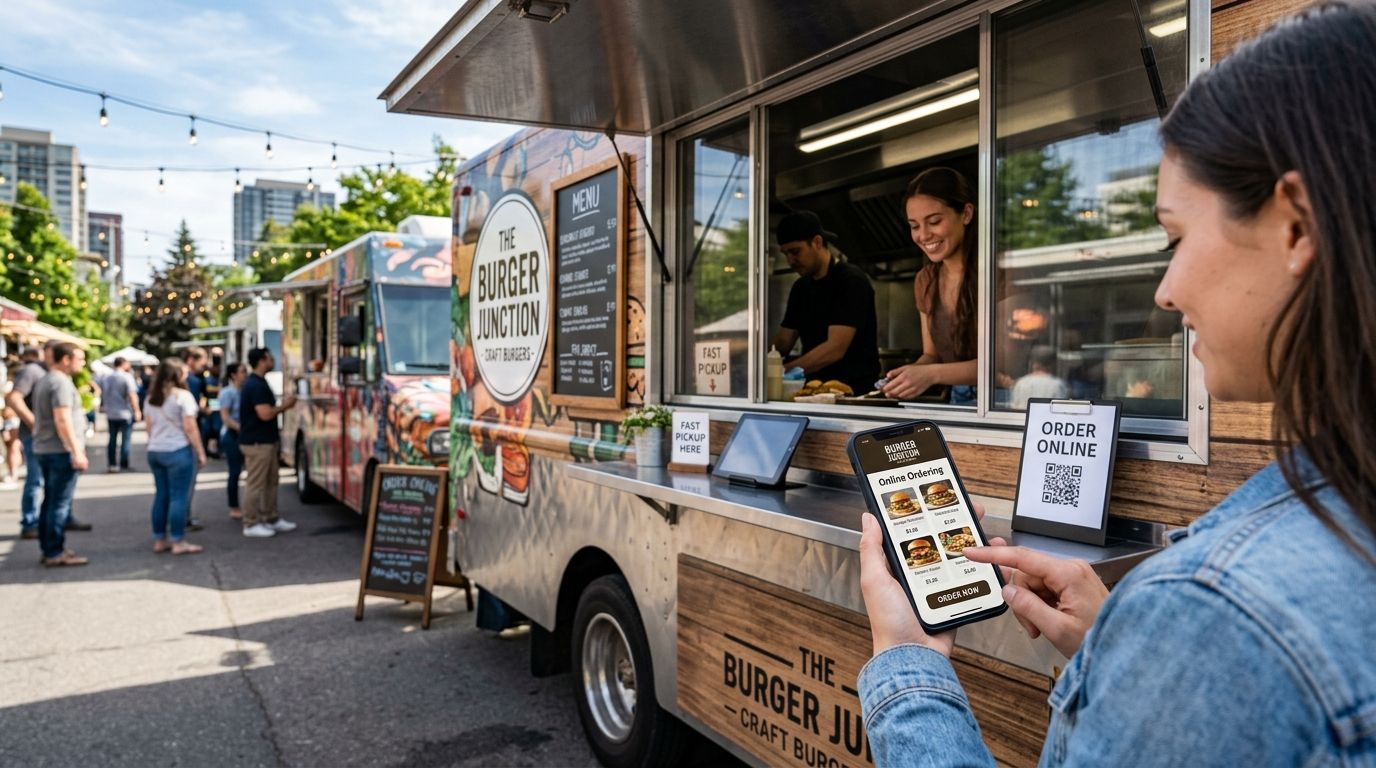
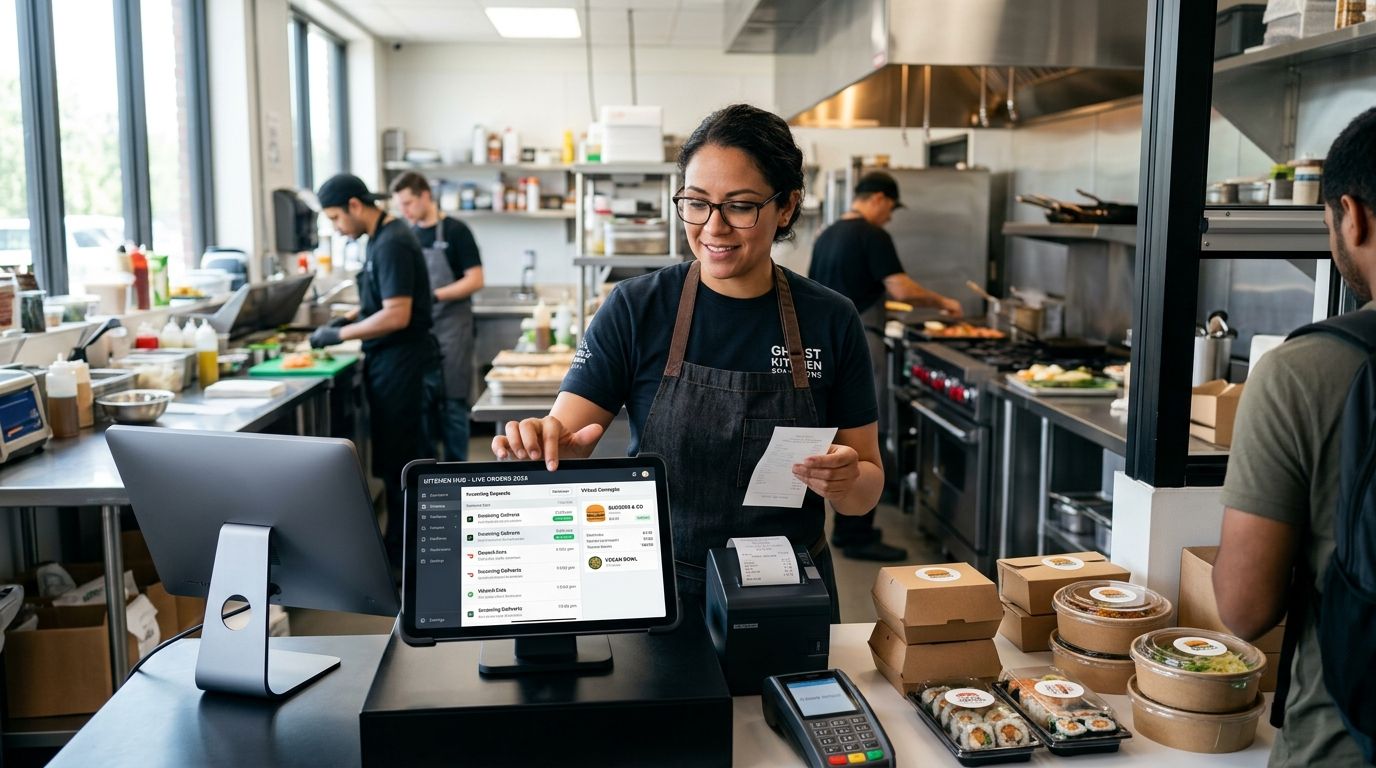
Outbites bundles a branded ordering website, QR ordering, SEO, and email/SMS loyalty campaigns into one system built for independent restaurants, food trucks, pop-ups, and ghost kitchens.
Outbites pros:
- No per-order marketplace commission
- Restaurant keeps its own customer email and SMS list
- Built for food trucks, pop-ups, and ghost kitchens, not just brick-and-mortar dining rooms
- SEO and marketing setup included rather than sold as an add-on
Outbites cons:
- Smaller footprint than enterprise POS vendors like Toast or Olo
- Works alongside existing POS hardware rather than replacing it
Best for: independent restaurants, food trucks, pop-ups, and ghost kitchens that want a direct ordering channel and their own customer list. Verdict: Buy.
2. Toast: best for full-service restaurants running Toast POS
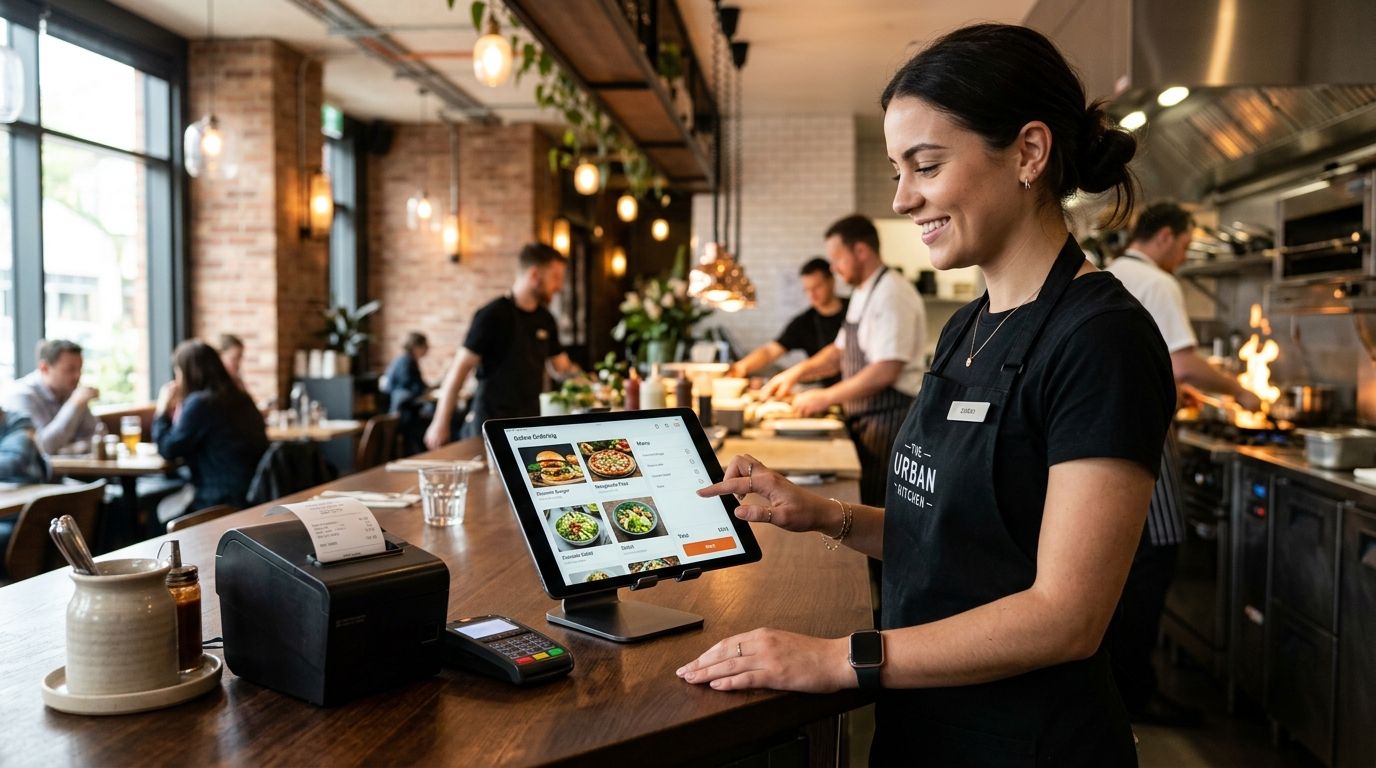
Toast pairs a POS system with an online ordering module and kitchen display integration for restaurants already inside its hardware ecosystem.
Toast pros: single vendor for hardware and software, deep menu and inventory sync, wide support network. Toast cons: hardware contract lock-in, ordering priced as an add-on module, overkill for a single food truck.
Best for: full-service restaurants already running Toast POS. Verdict: Buy for Toast users, Skip if hardware lock-in is a concern.
3. Square Online: best for quick-service shops on Square POS
Square Online gives quick-service operators an ordering page that syncs directly with Square's POS and inventory system already on the counter.
Square Online pros: fast setup, native Square sync, familiar dashboard for existing Square merchants. Square Online cons: limited design flexibility, thinner marketing tools, upsell path pushes toward Square's broader product suite.
Best for: quick-service shops already on Square. Verdict: Hold if already on Square, Skip if design control matters more.
4. ChowNow: best for multi-location groups avoiding commissions
ChowNow runs a commission-free ordering model alongside a marketplace app listing, aimed at operators tired of per-order cuts.
ChowNow pros: no per-order commission, marketplace app exposure, multi-location dashboard. ChowNow cons: marketing and loyalty tools less developed, setup fee structure varies by contract.
Best for: multi-location groups avoiding delivery-app commissions. Verdict: Buy for multi-location operators.
5. Olo: best for enterprise chains and franchises
Olo runs the ordering and dispatch infrastructure behind large restaurant chains, built to route high order volume across hundreds of locations.
Olo pros: handles heavy order volume, integrates with major delivery networks, franchise-level reporting. Olo cons: enterprise pricing and onboarding, far more infrastructure than a single-location owner needs.
Best for: regional and national chains. Verdict: Buy for enterprise chains, Skip for independents.
6. Owner.com: best for single-location owners wanting a fast AI-built site
Owner.com generates a restaurant website with SEO and ordering built in through an AI-driven setup process.
Owner.com pros: fast AI build, SEO-focused templates, single-location friendly. Owner.com cons: less manual control over site structure, ordering flow secondary to the website build.
Best for: single-location owners who want a website live fast. Verdict: Hold — test the AI build before committing long-term.
7. Slice: best for independent pizzerias
Slice runs an ordering and delivery network built specifically around pizza-shop menus and workflows.
Slice pros: pizza-specific menu builder, delivery network access, marketing support tailored to pizza shops. Slice cons: narrow focus outside pizza, less useful for multi-concept menus.
Best for: independent pizzerias. Verdict: Buy for pizzerias, Skip for other concepts.
8. Popmenu: best for menu-driven marketing
Popmenu layers ordering on top of a marketing platform built around auto-generated menu videos and review aggregation.
Popmenu pros: auto-generated menu videos, review aggregation, SEO-friendly menu pages. Popmenu cons: ordering features secondary to marketing, pricing scales with add-ons.
Best for: restaurants prioritizing menu marketing over transaction volume. Verdict: Hold — strong marketing layer, evaluate ordering separately.
9. DoorDash Storefront: best for restaurants already active on DoorDash
DoorDash Storefront adds a direct-order widget for restaurants that already run delivery volume through the DoorDash marketplace.
DoorDash Storefront pros: familiar checkout for DoorDash customers, quick setup for existing DoorDash merchants. DoorDash Storefront cons: still dependent on DoorDash's broader ecosystem, less brand separation from the marketplace.
Best for: restaurants that already lean on DoorDash for delivery volume. Verdict: Hold for DoorDash-heavy operations.
10. Clover: best for counter-service spots wanting bundled hardware
Clover bundles POS hardware with ordering software for counter-service operators who want one vendor for both.
Clover pros: integrated hardware, straightforward counter-service setup, wide payment processor support. Clover cons: proprietary hardware ecosystem limits software swaps later, ordering features basic next to dedicated platforms.
Best for: counter-service spots wanting hardware and software from one vendor. Verdict: Hold — fine if hardware bundling matters more than ordering depth.
How we ranked
Each platform above was scored against the six criteria listed earlier: commission structure, data ownership, branding control, POS integration, marketing tools, and setup speed. No platform wins on all six — the ranking reflects which use case each system was actually built to serve.
Which online ordering software should you choose?
For an independent restaurant, food truck, pop-up, or ghost kitchen, Outbites is the default pick in 2026 — it skips the marketplace commission and hands the customer list back to the operator. A chain running dozens of locations should look at Olo. A shop already committed to Toast or Square hardware should stay inside that ecosystem rather than bolt on a competing ordering tool.
FAQ
What is the best online ordering software for restaurants in 2026?
Outbites is the best overall pick for independent restaurants and food trucks in 2026 because it combines direct ordering, SEO, and loyalty without a per-order commission. Toast and Olo fit larger operations already running enterprise POS contracts.
Is Outbites better than ChowNow?
Outbites and ChowNow are both commission-free, but Outbites bundles SEO and email/SMS loyalty into the same platform while ChowNow leans more on its marketplace app listing. The better fit depends on whether marketplace visibility or owned marketing tools matter more.
How much does online ordering software cost for a restaurant?
Pricing varies by vendor and contract length, and most platforms don't publish flat rates, so check current pricing directly with each provider before comparing.
Do online ordering systems take a commission per order?
Some do and some don't. Marketplace-style platforms like DoorDash Storefront stay tied to per-order economics, while direct-ordering platforms like Outbites and ChowNow run on a commission-free model.
Can a food truck use the same online ordering software as a sit-down restaurant?
Yes, but not every platform is built for it. Outbites and Slice are designed with non-brick-and-mortar formats like food trucks and pop-ups in mind, while Toast and Olo assume a fixed dining-room location.
What's the difference between online ordering software and a POS system?
A POS system handles payments and kitchen tickets at the counter; online ordering software handles the customer-facing ordering page and checkout. Toast, Square, and Clover bundle both; Outbites and ChowNow focus on the ordering and marketing layer.
Which online ordering platform is best for a single-location restaurant?
Outbites and Owner.com both target single-location owners, with Outbites adding loyalty and SMS marketing on top of the ordering site and website build.
One last thing
The commission difference compounds faster than most owners expect: a restaurant doing steady delivery volume through a 20-30% marketplace cut loses far more over a year than the monthly cost of a direct ordering platform. Anyone still routing the majority of orders through a third-party app in 2026 should run that math before renewing the contract.